August has been a very good month of fishing across Southern Alberta, with Walleye providing consistent action and Northern Pike spread throughout the water column. With summer conditions still firmly in place, anglers are finding success by adapting to changing depths, working weed lines and covering water to locate active fish.
The best news is that the fishing should only improve from here. As September approaches and water temperatures slowly begin to cool, both Walleye and Northern Pike will begin preparing for the transition into fall. For anglers, that means plenty of opportunities to enjoy the final stretch of summer fishing and the increasingly aggressive bite that comes with the changing season.
Walleye Fishing Has Been Very Good
August has been an excellent month for Walleye fishing so far.
We’ve been finding active Walleye tight to deep weed lines, with some fish holding right in the weeds themselves. These fish can be particularly exciting to target because they aren’t necessarily confined to one specific depth. Instead, they’re using the weed growth as cover while taking advantage of the forage available around it.
When Walleye are relating closely to weeds, presentation becomes important. Working the edges and getting a lure or bait close to the vegetation can produce fish, but anglers shouldn’t be afraid to move directly into the weeds when conditions allow.
The key is finding the active fish.
A weed line that looks perfect on the map isn’t necessarily going to hold fish at every point along its length. Electronics can help identify changes in depth, structure and concentrations of baitfish. Small variations in the bottom or vegetation can create preferred holding areas and feeding zones.
During periods of bright sunshine, some Walleye may also move toward deeper water or tuck farther into cover. Early mornings, evenings and periods of cloud cover can provide excellent opportunities as fish become more comfortable moving and feeding.
Fish the Weed Line – and Don’t Be Afraid to Get Into the Weeds
For anglers accustomed to targeting Walleye primarily along rocky structure or open-water contours, the current weed pattern is a good reminder that Walleye can use a variety of habitat throughout the summer.
Deep weed lines provide both cover and access to food. The transition between vegetation and open water can be especially productive because it gives predatory fish an opportunity to ambush baitfish.
But the edge isn’t always the only place to look.
Some of the active Walleye we’ve been finding have been right in the weeds. That means anglers should experiment with their positioning rather than automatically staying several feet outside the vegetation.
If you’re marking fish or seeing bait activity inside the weed growth, work that area thoroughly. A lure presented naturally through openings in the vegetation can trigger fish that won’t necessarily move far to chase a bait.
This is also where boat control becomes important. Maintaining a consistent speed and position allows you to work a productive weed line more effectively instead of constantly drifting away from the fish.
Northern Pike Are Spread Out
Northern Pike have been following a different pattern.
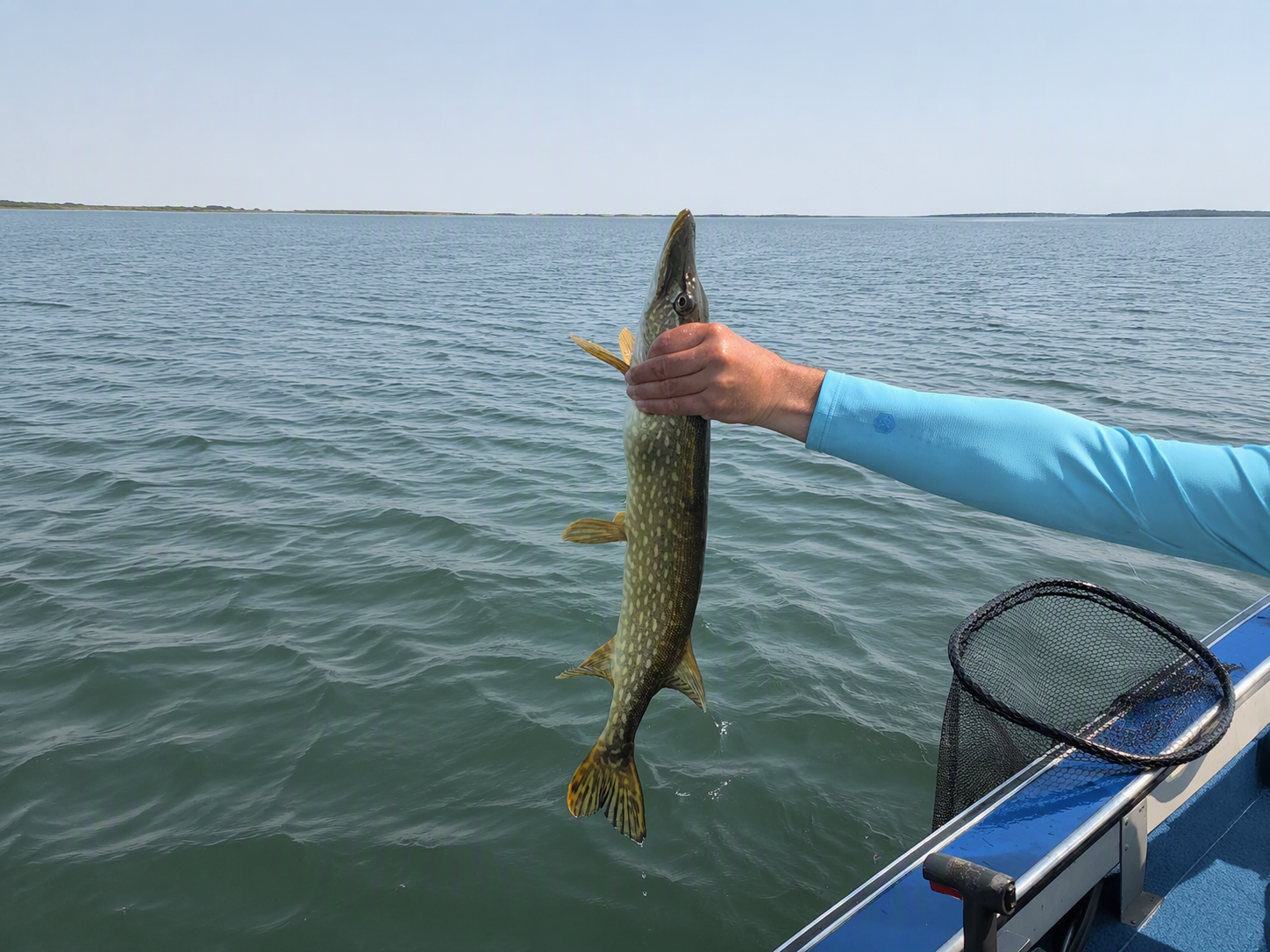
Rather than concentrating heavily in one particular depth, the Pike have been spread out across multiple depths. As a result, covering water has been the best approach.
This is a classic situation where mobility pays off.
Instead of spending too much time trying to force fish to bite in one location, anglers can use casting and trolling techniques to search different depths and pieces of structure. Once a concentration of active Pike is found, slow down and thoroughly work the area.
Pike can be found around weed beds, drop-offs, shallow flats and transition zones, and their position can change throughout the day.
Wind can also play an important role. Wind-blown shorelines and weed edges can concentrate baitfish, which in turn can attract Pike. If the wind is pushing bait toward a particular shoreline or point, that area deserves extra attention.
The important thing right now is to keep moving until you find the fish.
Covering Water Is the Name of the Game
When fish are spread across multiple depths, covering water becomes one of the most valuable strategies an angler can use.
Trolling is an obvious way to accomplish this, allowing you to explore different depths and contours while keeping a presentation in the strike zone. Casting can also be extremely effective, particularly when working weed beds, shorelines and structural transitions.
The goal isn’t simply to travel from one spot to another. Pay attention to what the fish are telling you.
If one depth consistently produces Pike, focus more time there. If Walleye are repeatedly showing up along a particular weed edge, identify what makes that section different from the rest of the shoreline.
Every fish caught can provide information about the pattern.
That information becomes increasingly valuable as conditions change throughout the day.
September Should Be Even Better
While August fishing has been very good, September is shaping up to be an exciting month.
As the water slowly begins to cool down, fish will respond to the changing conditions. Northern Pike should become increasingly active as they take advantage of cooler water and increased feeding opportunities.
Walleye will also begin transitioning toward their fall patterns. The exact timing will vary by lake and weather, but cooling water generally brings changes in fish location and behavior.
This transition is one of the best times of the year to be on the water.
The summer heat begins to fade, daytime temperatures become more comfortable and fish can become increasingly aggressive. For anglers, September can offer an excellent combination of good fishing and much more comfortable conditions on the water.
Don’t Stop Looking for Fish
One of the biggest lessons from this summer’s fishing has been the importance of staying mobile and paying attention to fish location.
Walleye are using deep weed lines and, at times, moving right into the vegetation. Pike are spread across multiple depths. That means there isn’t necessarily one magic depth or one lure that will consistently produce throughout the day.
Successful anglers are willing to adjust.
Change depths. Move along the weed line. Cover water. Watch the electronics. Pay attention to baitfish. If the fish aren’t where you expected them to be, find out where they are instead of continuing to fish empty water.
That approach becomes even more important as we move into September and the water temperatures begin their gradual decline.
Guided Fishing in Southern Alberta
For anglers who are new to the area or simply want to spend a day focused on catching fish rather than figuring out a new lake, a guided trip can be an excellent option.
A local guide can help anglers understand seasonal patterns, locate productive structure and adjust techniques as conditions change. This is especially valuable when fish are spread across different depths and moving between habitat types.
For beginners, a guided trip can provide an introduction to Alberta Walleye and Northern Pike fishing. Experienced anglers can also benefit from learning how local fish are responding to current conditions.
The fish are there. It’s just a matter of finding them!